Health on the Road
Vision and Hearing Standards for the DOT Physical
The two most measurable standards — 20/40 acuity with a 70-degree field, and the whisper-or-audiometric hearing test — plus the 2022 change everyone should know: vision moved from an exemption program to individual assessment under 391.44, while hearing kept its exemption path.
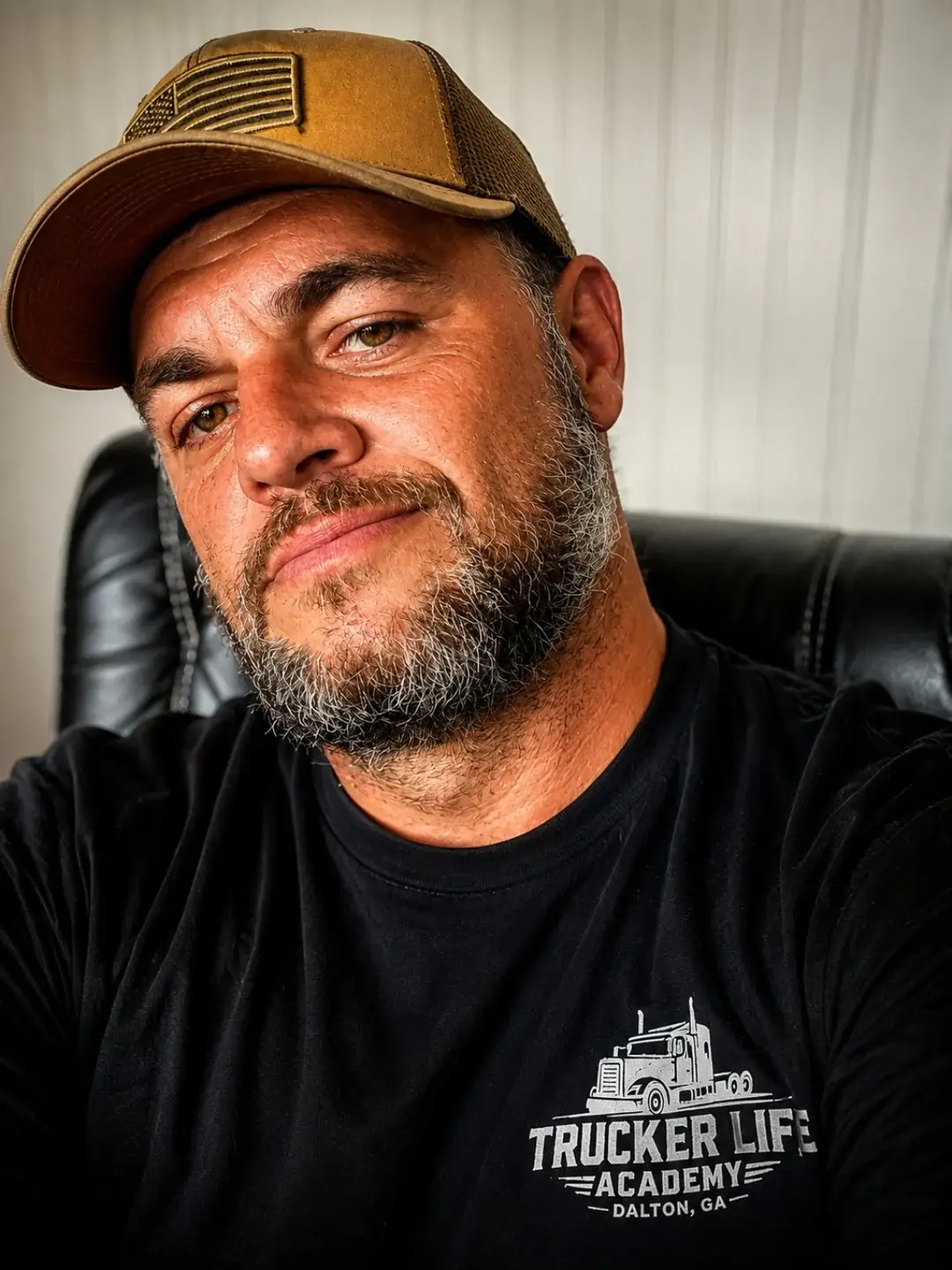
CDL-A driver and instructor — 17 years driving, zero violations. Founder of Trucking Life with Shawn and the TLWS truck driving school in Dalton, Georgia.
Last updated July 19, 2026
✓ Last reviewed against the eCFR July 19, 2026
Quick answer: Vision: 49 CFR 391.41(b)(10) requires distant acuity of at least 20/40 in each eye and both eyes together (glasses or contacts allowed), a horizontal field of at least 70 degrees in each eye, and the ability to recognize standard traffic-signal colors. Hearing: (b)(11) requires perceiving a forced whisper at 5 feet or more, or an average hearing loss of 40 dB or less in the better ear (500/1,000/2,000 Hz) — hearing aids allowed. The big 2022 change: drivers who cannot meet the vision standard in one eye no longer apply for an exemption — the individual-assessment path of 391.44 (an eye specialist completes Form MCSA-5871, then the examiner evaluates) replaced the vision exemption program, with certification capped at 12 months. Hearing kept its exemption program — the two senses now travel different paths, and knowing which is which saves months.
Medical-information disclaimer: Last reviewed July 19, 2026. This is general information, not medical advice — vision and hearing are measured at your exam, and only a certified medical examiner (with a specialist's input where 391.44 applies) decides qualification. Confirm current requirements with FMCSA. Not affiliated with FMCSA or any clinic.
The vision standard, unpacked (federal regulation)
Three measurable tests at the DOT physical:
- Distant acuity: at least 20/40 (Snellen) in each eye and both eyes combined — corrective lenses count, so wear them.
- Field of vision: at least 70 degrees in the horizontal meridian of each eye.
- Color: the ability to recognize the standard red, green, and amber of traffic signals — recognition, not a full color-vision battery.
Meet all three (corrected is fine) and vision is a checkbox on the way to a certificate.
The 2022 change: individual assessment replaced the vision exemption (federal regulation)
Before 2022, a driver who could not meet the standard in one eye needed a federal vision exemption. The January 2022 final rule (effective March 22, 2022) replaced that program with 391.44:
1. An ophthalmologist or optometrist examines you and completes the Vision Evaluation Report (Form MCSA-5871).
2. A certified medical examiner then performs the DOT exam — the MCSA-5871 must be recent (the exam ties to a 45-day window from the specialist's signature, mirroring the diabetes path).
3. The examiner makes an individual assessment — no federal application queue, no exemption grant to wait for.
4. Certification on this path is capped at 12 months, so it is an annual rhythm like 391.46 diabetes. (Some drivers new to this path also complete a road test with their carrier under the rule's transition provisions — ask your carrier what applies.)
If you read older material describing "applying to FMCSA for a vision exemption," it is describing the pre-2022 world. An older grandfathering provision (former § 391.64) once covered vision-waiver study participants, but certificates issued under it were voided after March 22, 2023 and the section has since been removed — it is not a path a driver can use today.
The hearing standard, unpacked (federal regulation)
Either test works, and a hearing aid is allowed for both:
- Forced whisper: first perceive a forced whispered voice at not less than 5 feet, in the better ear; or
- Audiometric: average hearing loss in the better ear of 40 dB or less at 500, 1,000, and 2,000 Hz.
If you use a hearing aid to meet the standard, the certificate reflects that you must wear it while driving — wear it to the exam.
Hearing kept its exemption program (federal program — the asymmetry to remember)
Unlike vision, a driver who cannot meet the hearing standard even aided still applies to FMCSA's hearing exemption program — an application reviewed and granted federally, typically in renewable multi-year terms. Deaf and hard-of-hearing drivers hold CDLs today through exactly this path. The mechanics of exemption applications live in the exemptions and variances guide. (Vision → individual assessment at the examiner level; hearing → federal exemption program. Two different processes; do not let old articles cross the wires.)
A worked illustration (not medical advice)
A driver blind in one eye since childhood reads a 2019 forum post about the "vision exemption backlog" and nearly gives up. Current process instead: an optometrist completes MCSA-5871 on a Tuesday; the following week a registry examiner reviews it, completes the exam, and makes the individual assessment — certifying for 12 months. No federal application, no queue. The annual specialist-plus-exam rhythm is the trade for the streamlined path. (Illustration of the post-2022 process, not medical advice; outcomes depend on your evaluation.)
Common mistakes
- Testing uncorrected when you own correction. Glasses, contacts, and hearing aids are allowed — bring and wear them.
- Following pre-2022 vision advice. The exemption program is gone; 391.44's individual assessment replaced it. Months of confusion live in that difference.
- Assuming the hearing path matches the vision path. It does not — hearing still runs through a federal exemption program.
- Letting the specialist form go stale. The MCSA-5871 ties to a 45-day window, like the diabetes form — book the DOT exam promptly.
- Forgetting the 12-month rhythm. 391.44 certification is annual; plan the specialist visit and exam as a pair in your renewal calendar.
Your vision-and-hearing checklist
- Correction brought and worn: glasses/contacts/hearing aids
- Standard-eye numbers known: 20/40 each and both · 70-degree field · signal colors
- Hearing: whisper at 5 feet or ≤40 dB average in the better ear
- One-eye path: MCSA-5871 + 391.44 individual assessment, exam within the window, annual renewals
- Hearing shortfall even aided: a federal hearing exemption application is the route
Keep learning
- The exam: The DOT Physical: What to Expect · all thirteen: DOT Physical Requirements
- Alternative paths in depth: Exemptions, Variances, and the SPE Certificate
- See the whole licensing road: How to Get Your CDL · TLWS Academy · CDL Pre-School · newsletter.
Frequently asked questions
What is the DOT vision requirement?
49 CFR 391.41(b)(10): distant visual acuity of at least 20/40 in each eye and both eyes combined, with corrective lenses allowed; a field of vision of at least 70 degrees in the horizontal meridian of each eye; and the ability to recognize standard traffic-signal colors. Meet all three — corrected is fine — and vision is a routine part of the exam.
Can I get a CDL with vision in only one eye?
Since March 2022 there is an individual-assessment path under 49 CFR 391.44 that replaced the old vision exemption program. An ophthalmologist or optometrist completes Form MCSA-5871, then a certified medical examiner performs the DOT exam and makes an individual assessment — no federal exemption application. Certification on this path is capped at 12 months, and the examiner's determination decides each case.
What is the DOT hearing test?
Either of two tests under 391.41(b)(11), with a hearing aid allowed for both: first perceive a forced whispered voice at not less than 5 feet in the better ear, or show average hearing loss of 40 dB or less in the better ear at 500, 1,000, and 2,000 Hz on audiometry. If a hearing aid is used to qualify, the certificate requires wearing it while driving.
Is there still a hearing exemption for truck drivers?
Yes — unlike vision, the hearing standard kept its federal exemption program. Drivers who cannot meet the whisper or audiometric test even with a hearing aid can apply to FMCSA for a hearing exemption, granted in renewable terms, and deaf and hard-of-hearing drivers hold CDLs today through that path. Vision and hearing now follow different processes.
Do glasses or contacts disqualify me from a CDL?
No. The vision standard explicitly allows corrective lenses — 20/40 with correction meets the acuity requirement. Wear your usual correction to the exam. If you qualify with correction, the certificate reflects that you must wear it while driving, the same way a qualifying hearing aid must be worn.
Sources
Keep reading
DOT Physical Requirements: The 13 Standards of 391.41
The thirteen physical qualification standards in 49 CFR 391.41(b), in plain English — what each one addresses, which ones have alternative paths like 391.44, 391.46, and the SPE certificate, and where examiner judgment does the deciding.
9 min read →
DOT Medical Exemptions, Variances, and the SPE Certificate
Missing a standard as written is the start of a process, not the end of a career. The map of alternative paths — 391.44 and 391.46 regulation paths, the federal exemption programs, the SPE certificate for limb impairments, and the 391.47 dispute process.
9 min read →
The DOT Physical: What to Expect, Step by Step
What actually happens at a DOT physical — the health-history form, the vitals and vision/hearing checks, the urinalysis that is not a drug test, the hands-on exam, and how the examiner decides between a two-year card, a shorter one, or none.
9 min read →